


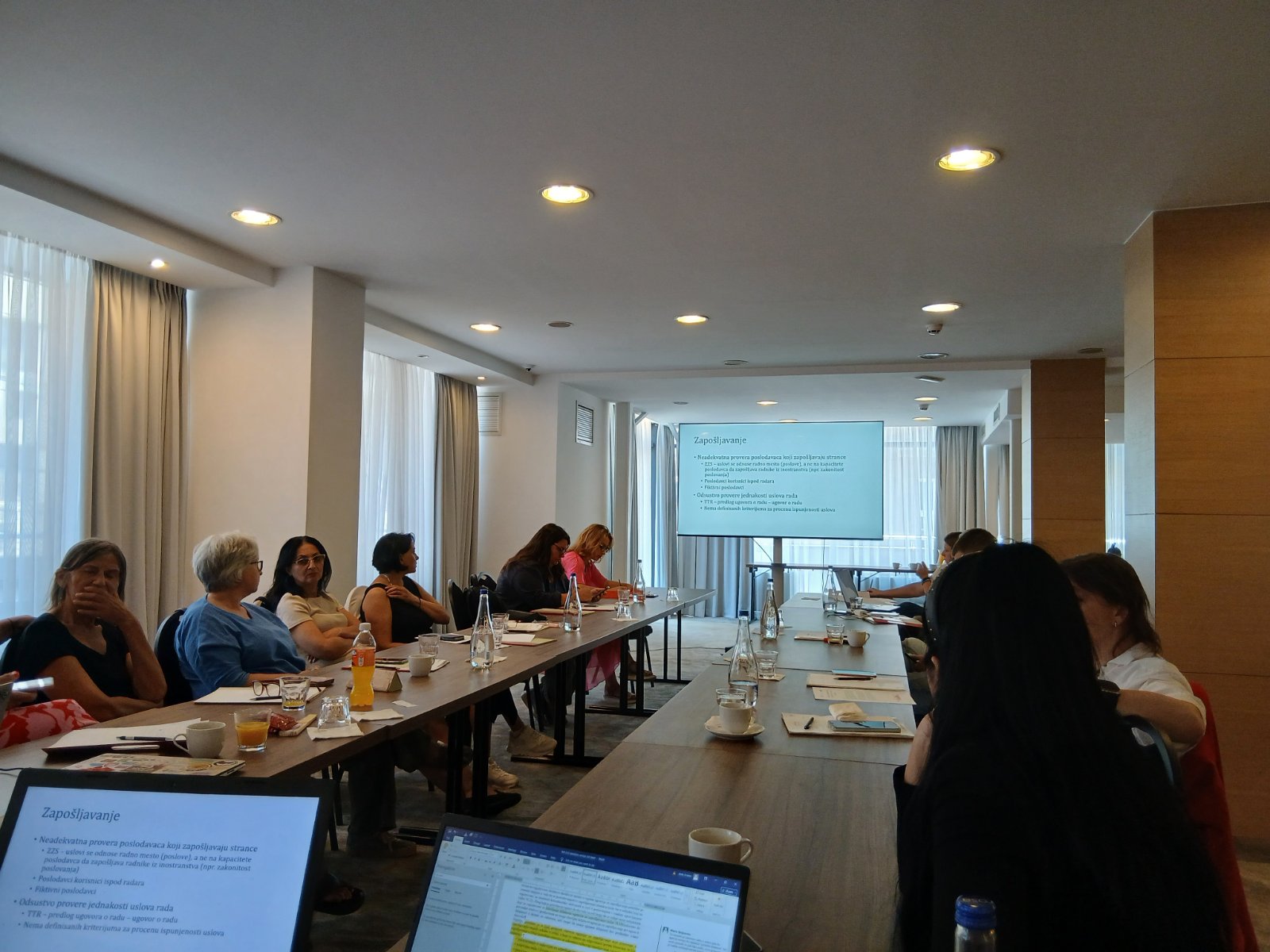
What happens when we talk about migration, labour exploitation, and the protection of rights not only from the perspective of institutions and organizations, but also directly with the people who experience these realities firsthand?
This was one of the questions that shaped the two-day training “Understanding and Adapting to New Migration Trends – The Civil Society Response,” organized by ASTRA on 27–28 July in Niš.
Over the two days, representatives of 12 civil society organizations from different parts of Serbia discussed changes in migration trends, the situation of foreign workers, the risks of labour exploitation and human trafficking, and opportunities to improve support for people in particularly vulnerable situations.
A special place in the programmer was given to the final session, “While We Await Improvements to the Institutional and Legislative Framework – The Civil Society Response,” which featured a presentation of the work of the Migrant Workers’ Union.
This session sparked one of the liveliest discussions of the training. It allowed participants to explore the challenges faced by foreign workers from the workers’ own perspective—from difficulties in exercising labour rights and accessing institutions to the need for better information, stronger connections, and mutual support.
One important outcome of the training, alongside the knowledge gained and experiences exchanged, was the strengthening of connections among civil society organizations that are increasingly encountering issues related to labour migration and the situation of foreign workers in Serbia.
Migration trends are changing rapidly, and the challenges evolve with them. The civil society response must therefore be informed, coordinated, and grounded in the experiences of the people who need support.
This training is organized within the project “Strengthening Serbian Migration Response and Inclusive Society “and implemented by ASTRA – Anti trafficking Action within the broader action “Strengthening Serbian Migration Response and Inclusive Society”, funded by the European Union and Asylum Protection Center, and implemented by Asylum Protection Center, Klara and Rosa, Volunteer Center of Vojvodina and Dituria