




SOS PHONE for victims of human trafficking (Mon–Fri, 9 AM–5 PM)
+ 381 11 785 0000Free call 0800 101 201

EUROPEAN NUMBER FOR MISSING CHILDREN (24/7)
116 000 Free call

The development of digital technologies and the internet has significantly transformed the way we communicate and connect, but it has also opened new channels for abuse, violence, and human trafficking. The organization ASTRA – Anti-Trafficking Action conducted a comprehensive analysis mapping how digital platforms are being used as tools within the cycle of violence and exploitation.
The project was developed within the regional initiative KnowCyber – support to civil society organizations in the Western Balkans, implemented by the e-Governance Academy with financial support from the European Union.
Digital technologies are used at all stages of human trafficking – from recruitment through fake job advertisements, dating platforms, and social media, to exploitation through coercion and control of victims, including threats of publishing intimate content.
Methods of abuse are continuously evolving, while risks in the digital space are intensifying. The anonymity of perpetrators, rapid technological development, and the cross-border nature of abuse make identification and prosecution more difficult. The lack of an up-to-date legal framework and adequate training for professionals further hinders an effective response.
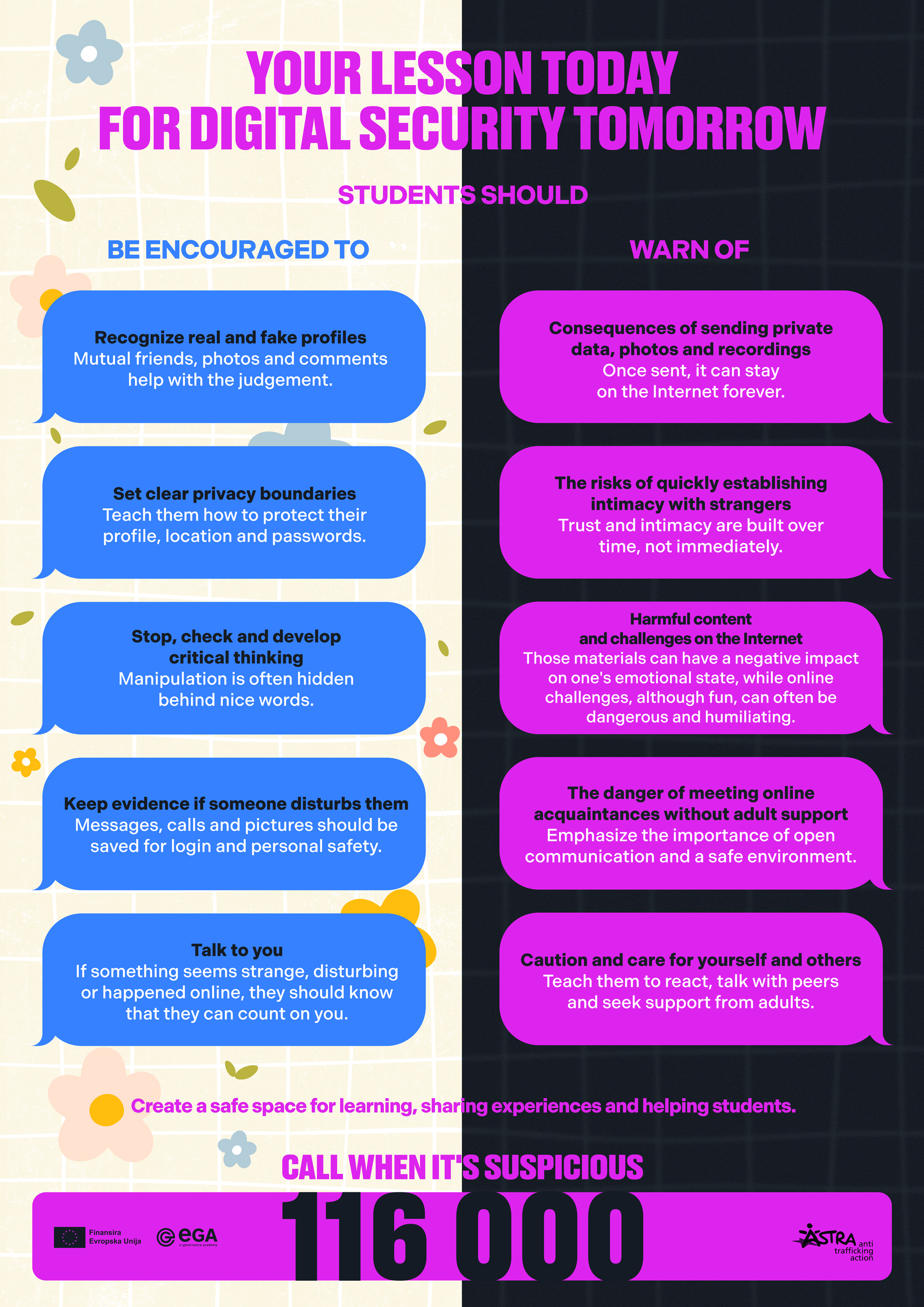
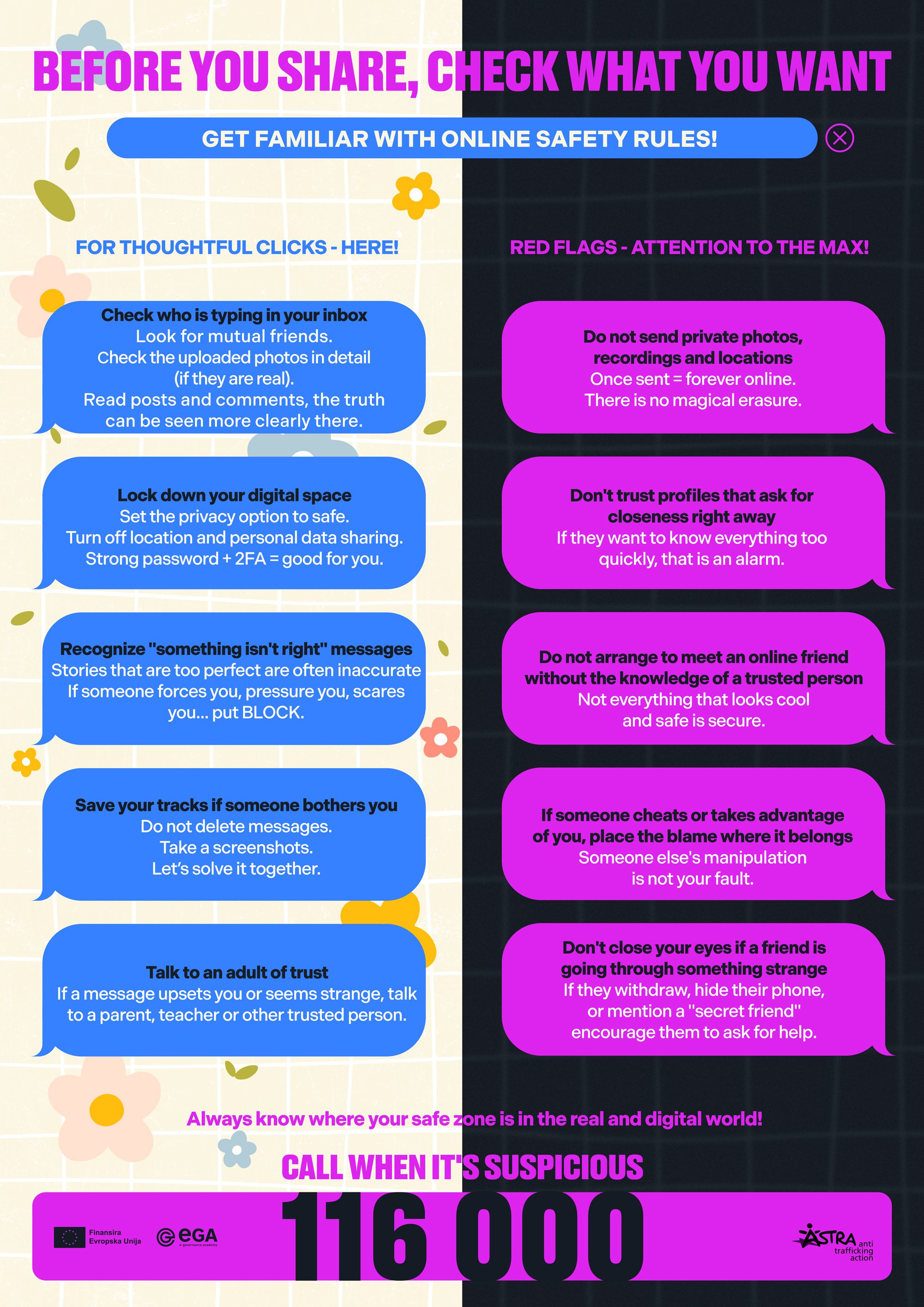
The digital dimension of violence often remains under the radar of judicial authorities and other actors providing support to victims. The role of educational institutions is still insufficiently recognized, despite their key importance in informing and empowering young people to protect themselves in the digital environment.
The analysis is based on real reports received through ASTRA’s SOS hotline and the European number for missing children 116000. Out of a total of 123 registered cases reported via the SOS hotline, 99 cases of human trafficking were identified, including 23 girls reported through the missing children hotline, as well as 24 cases of digital violence and abuse. Behind every number is a human life—a story of a lost childhood, stolen freedom, and violated rights.
The profile of identified victims reveals a concerning picture, with the most vulnerable groups being disproportionately affected. Out of 99 identified victims, as many as 26% are minors aged 10 to 17, all of whom are girls. The remaining 74% are adults between the ages of 20 and 51, including 44 women and 29 men. These findings clearly point to the gendered dimension of the issue, with girls and women being disproportionately represented among victims, highlighting the urgent need for targeted protection and prevention measures focused on these groups.
Forms of Exploitation
The analysis provides a detailed mapping of the various forms of exploitation to which victims are exposed. Labor exploitation emerges as the most prevalent, accounting for 43% of cases and primarily affecting adult men and women. Sexual exploitation is present in 32% of cases, with victims predominantly being women and girls, as well as one male victim. Particularly concerning is multiple exploitation, which accounts for 9% of cases and more frequently affects girls and women. Other documented forms of abuse include forced marriage (3%), forced criminal activities (2%), and forced begging (1%).
The analysis shows that digital platforms are used in 95% of human trafficking cases – from recruitment and exploitation to intimidation and control.
Most commonly used platforms:
Facebook (27%) – the most prevalent platform across all types of exploitation, especially sexual and labor exploitation.
Viber (22%) – used for direct contact, negotiations, and exerting pressure, while the location feature is often used to control victims.
Job websites (20%) – a key channel for labor exploitation, including platforms such as Glovo and Wolt.
Instagram (14%) – most commonly used in the context of sexual exploitation of younger populations.
Other platforms (17%) – TikTok, dating apps, WhatsApp, Messenger, X (Twitter), Snapchat, and Chinese social networks Momo and Xiaohongshu.