


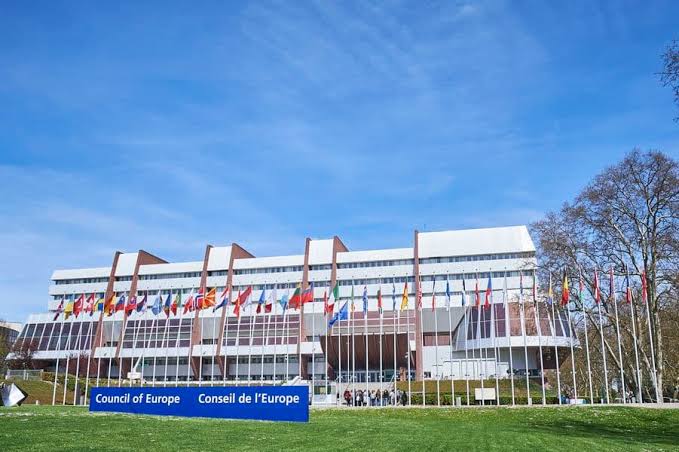
ASTRA’s CEO, Marija Andjelkovic, participated on 18th of September 2026, in a panel on corporate accountability and access to justice, held as part of the first Regional Forum on Business and Human Rights for Western Europe in Strasbourg.
The Forum took place on 17 and 18 September at the Council of Europe headquarters under the theme “Navigating the Challenges of Our Times: Driving Action on Business and Human Rights.” It brought together representatives of public institutions, international organisations, businesses, trade unions, civil society organisations and academia, as well as experts in business and human rights.
The Forum was jointly organised by the United Nations Working Group on Business and Human Rights, the UN Global Compact, the Council of Europe, the Danish Institute for Human Rights, the NOVA Centre on Business, Human Rights and the Environment, and the European Coalition for Corporate Justice.
Marija Andjelkovic participated in the session “Making CSDDD Accountability and Enforcement Work in Practice”, which focused on the practical implementation of the EU Corporate Sustainability Due Diligence Directive, the work of supervisory authorities, corporate civil liability, and the ability of victims of business-related human rights abuses to obtain protection and compensation.
The other panellists were:
- Annabell Brügemann, Senior Legal Advisor for Business and Human Rights at the European Center for Constitutional and Human Rights;
- Christoffer Bjornum, Deputy Director of the Norwegian Consumer Authority;
- Martijn Scheltema, attorney at law at Pels Rijcken;
- Serena Alonso, Responsible Business Conduct Manager at Dormakaba;
- Patrycja Pogodzińska, Legal Expert at the European Union Agency for Fundamental Rights;
- Claire Bright, Associate Professor at NOVA School of Law.
Addressing the measures states must take to ensure that corporate civil liability is effective in practice, Marija Andjelkovic presented ASTRA’s experience from labour exploitation cases in Serbia.
She recalled that civil society organisations had documented indicators of possible labour exploitation, including passport retention, restrictions on freedom of movement, problems related to wages and employment contracts, excessive working hours, inadequate accommodation, and workers’ fear of dismissal, retaliation or removal from the country.
“Laws are important, but they are not enough on their own. What matters is whether the state responds promptly, enforces the law and genuinely protects workers. A right that cannot be exercised safely, collectively and without disproportionate costs is not an effective remedy,” Andjelkovic emphasised.
She stressed that the competent authorities must inspect working and living conditions promptly and independently, interview workers without employers or intermediaries being present, and investigate the entire chain of responsibility—from recruitment agencies and subcontractors to the company benefiting from the workers’ labour.
She particularly highlighted the need to provide workers immediately with safe accommodation, interpretation, legal assistance, healthcare and protection against retaliation and deportation. A worker’s immigration status must not prevent them from reporting abuse or seeking justice.
Where large numbers of workers experience the same or similar violations, states should provide collective redress mechanisms and allow specialised civil society organisations and trade unions to represent workers’ interests with their informed consent.
“In cases of labour exploitation, the harm is often collective, while vulnerability is individual. Requiring every worker to initiate proceedings alone increases costs, fear and the risk of retaliation, while weakening the evidence of a pattern of conduct affecting the entire group,” Andjelkovic said.
Speaking about the role of civil society, she noted that NGOs, trade unions and legal clinics often serve as the first bridge between workers and institutions. They can build trust, explain rights in a language workers understand, document abuses, preserve evidence and provide long-term support.
However, civil society organisations cannot and should not replace labour inspectorates, prosecutors, courts or supervisory authorities.
“NGOs can open the door to justice, but they cannot be expected to carry the entire justice system through it. The duty to investigate, protect victims and provide an effective remedy must remain with the state, while responsible companies must be held accountable for the harm they have caused,” Andjelkovic concluded.
More information about the Regional Forum is available on the official event website.